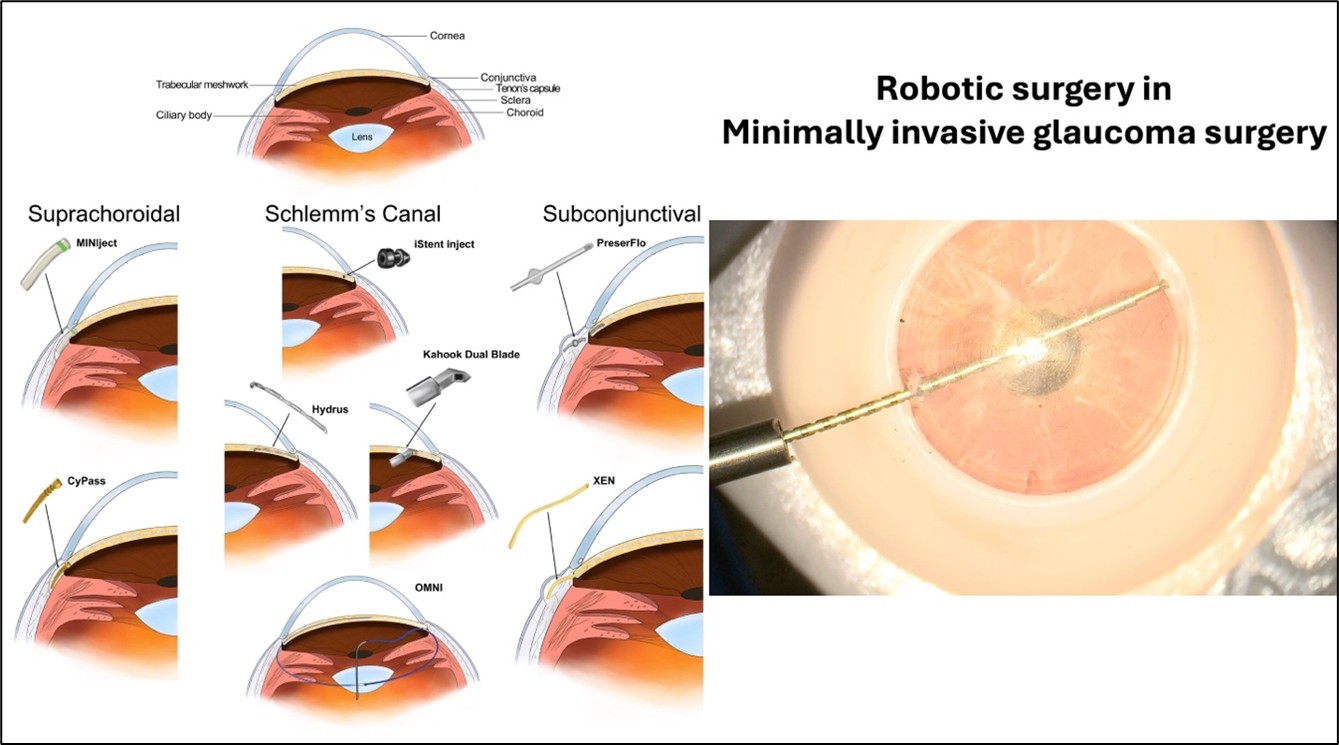

Minimally invasive glaucoma surgery (MIGS) has increased exponentially in the last decade and the global MIGS market will increase to $6 billion by 2029. In MIGS procedures, microscopic implants are placed in Schlemm’s canal or the suprachoroidal space, where precise anatomic positioning is critical for efficacy. Studies have shown that 72% of iStent MIGS are incorrectly positioned in Schlemm’s canal, leading to high failure rates in patients.
The first aim is to build a new surgical robot arm to significantly improve the precision and success rates in MIGS. Robotic surgery will also minimise trauma to the surrounding tissues and decrease the risk of scarring. The second aim is to develop human/robot control interfaces to precisely inject advanced therapeutics, such as gene therapy, to the trabecular meshwork or suprachoroidal space in glaucoma. Robotic assistance will significantly improve the precision and reproducibility of the injections, which is essential in future clinical trials.