2026 Summer Workshop on Surgical, Assistive, and Interventional Engineering
Mon 15 June to Fri 19 June
Applications Open
Designed for postgraduate students, NHS professionals, and researchers across academia and industry
Surgical, Assistive, and Interventional Engineering is transforming healthcare by merging groundbreaking technology with medical innovation. Our Summer Workshop offers a unique opportunity to explore this exciting field through hands-on learning and expert guidance.
The 5-day in-person event will feature live lectures, interactive sessions, and practical projects. Participants will:
- Gain insights into the latest advances in surgical tools, AI-driven planning, and imaging technologies.
- Engage directly with leading international experts and fellow researchers.
- Learn about innovations in areas such as: Smart Instruments & Active Implants, Clinical Translation, Assistive Robotics, Surgical Data Science, Digital Twins for Healthcare, and Industry
- For more information, please contact SIE-SummerSchool@kcl.ac.uk
Join us to expand your expertise, gain practical skills, and build valuable connections within a collaborative and forward-thinking environment.
We have joined the Institute of Electrical and Electronics Engineers (IEEE) credentialing program and as a result we can offer IEEE certificates to our attendees upon completion of the workshop.
Pricing
- Academic & NHS: £450
- Industry: £950
The rates above provide access to all workshop activities, coffee & lunch breaks, and a welcome event. They do not cover travel and accommodation costs.
Apply by email
Applicants should have a background relevant to Surgical, Assistive, and Interventional Engineering or a related field, such as Medical Imaging, Computer-Assisted Intervention, and/or Instrumentation and Robotics.
Due to space constraints, selection will be competitive. Please email a short personal statement (~250 words) outlining your suitability and goals for attending together with a CV to SIE-SummerSchool@kcl.ac.uk.
Application deadline: 1 April 2026
Notifications of acceptance: 15 April 2026
*Please note that applications will be considered on a rolling basis until all available places are filled, and payment will be due 2 weeks from notification of acceptance.
Location
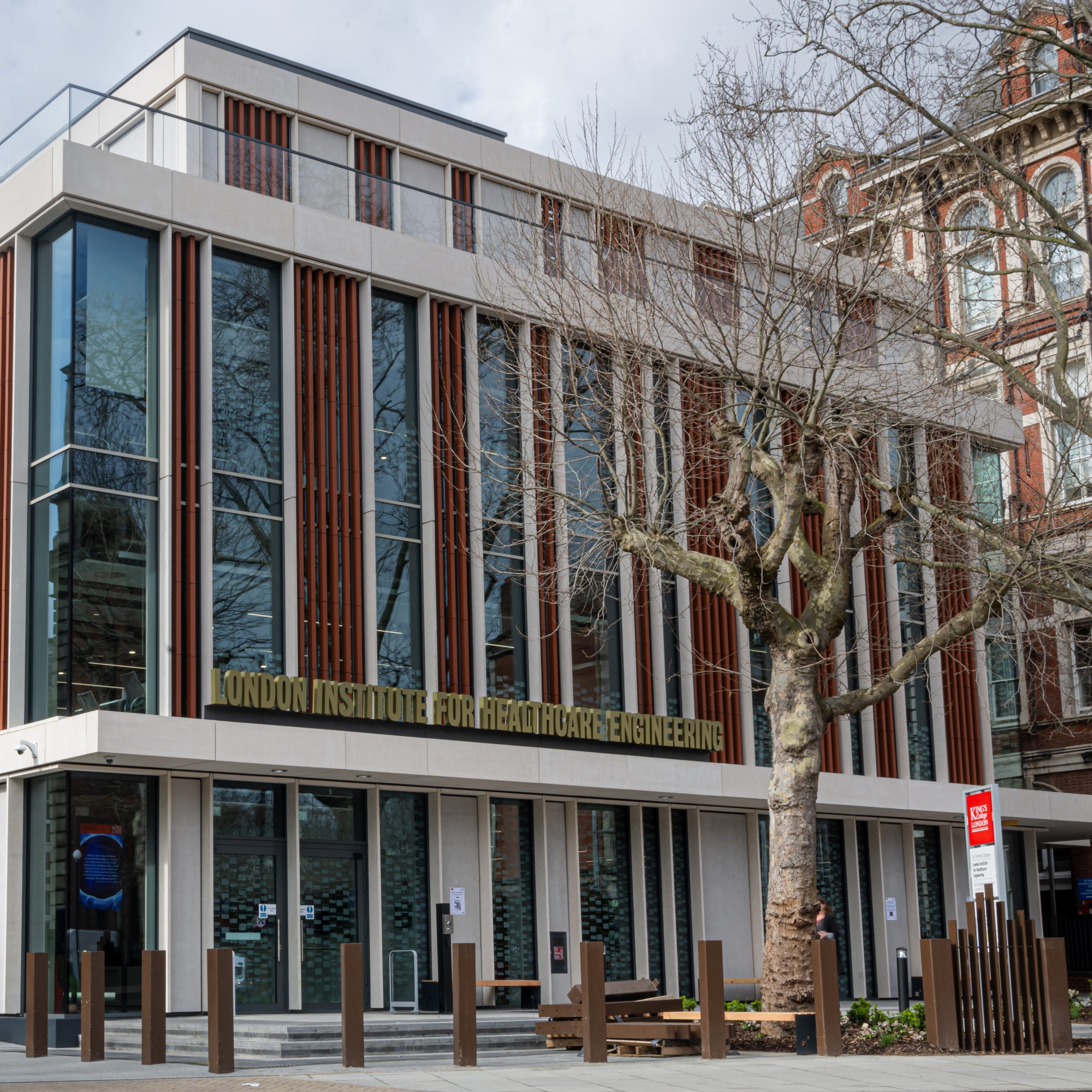
The workshop will take place in the cutting-edge Surgical & Interventional Engineering Laboratories at St Thomas’ Hospital and the London Institute for Healthcare Engineering (LIHE), King’s College London. These state-of-the-art facilities provide an unparalleled environment for hands-on learning and collaboration.
Organised in partnership
The 2026 Summer Workshop on Surgical, Assistive, and Interventional Engineering is organised in partnership by the EPSRC Centre for Doctoral Training in Advanced Engineering for Personalised Surgery & Intervention (AE-PSI) and the Research Department of Surgical & Interventional Engineering (SIE) in the School of Biomedical Engineering & Imaging Sciences at King’s College London.
Workshop leads
This year’s workshop leads are Prof Christos Bergeles (AE-PSI Deputy Director Operations), Dr Ildar Farkhatdinov (Senior Lecturer in Healthcare Engineering), Dr Rachel Sparks (Lecturer in Surgical Planning), and Dr Adelaide De Vecchi (Senior Lecturer in Computational Cardiovascular Modelling).

2025 Workshop – Attendee Testimonials
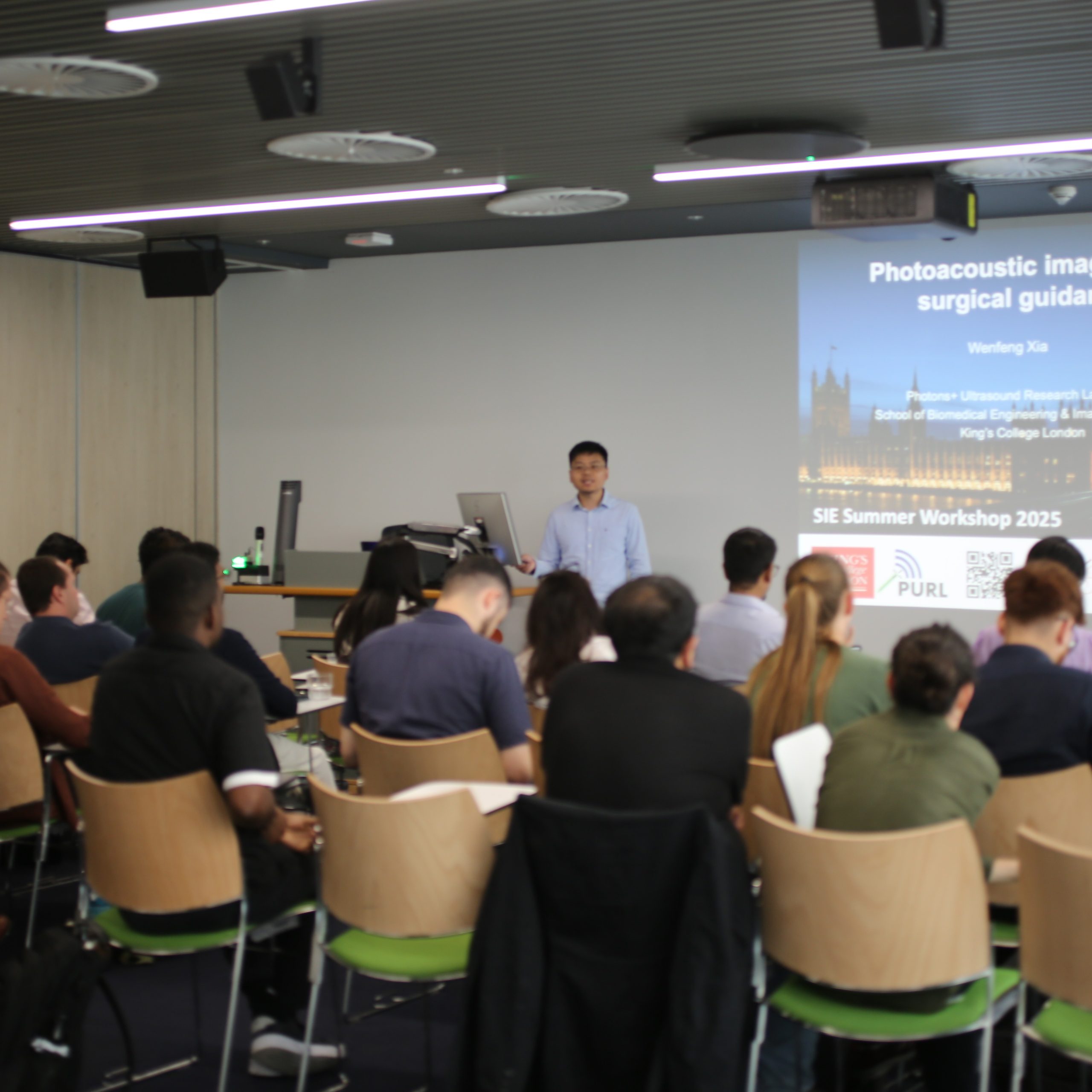
‘The Summer School was a great opportunity to connect and engage with a breadth of other professionals from varying backgrounds with the common interest of helping people through Surgical Interventional Engineering. As someone with little to no robotics experience, it was really enjoyable to learn how to control a robotic arm and think about an application of robotics that I’d never thought about before.’
‘I learned a great deal and feel more confident in my skills and knowledge thanks to the comprehensive content and engaging discussions. It not only enhanced our practical skills, but also provided us opportunities to know new friends and meet fabulous scholars.’
‘All the speakers were amazing and passionate about their subject. I particularly liked how every day had a certain theme so that you could gain knowledge on a topic and see the different applications it can have.’
This year’s speakers
Prof Christos Bergeles
Professor of Surgical Robotics, King’s College London
Christos leads research in surgical robotics and image-guided interventions, developing AI-driven precision medicine and robotic-assisted therapies. Christos directs the “Robotics and Vision in Medicine Lab” whose mission is to develop micro-surgical robots that deliver regenerative therapies deep inside the human body. His work focuses on integrating robotics and imaging to advance next-generation surgical innovation.
Dr Georg Rauter
Associate Professor of Surgical Robotics and Head of the Bio-Inspired RObots for MEDicine Laboratory (BIROMED-Lab) at the University of Basel
Georg leads research focusing on bio-inspired medical and surgical robotics, including hyper-redundant robotic endoscopes, rehabilitation robotics, and robotic systems for precise surgical interventions. His work also develops advanced sensing, control, and tele-operation technologies to enable translational robotic platforms for clinical use.
Prof Norihisha Miki
Professor of Mechanical Engineering at Keio University
Prof Miki leads research on micro/nano-engineering and Microelectromechanical Systems (MEMS) for innovative sensors, actuators, bio/medical devices, and human-machine interface technologies. His work spans micro/nano-fabrication, wearable and biomedical systems, and advanced MEMS-based interfaces for healthcare and communication.
Dr. Adelaide De Vecchi
Head of the Research Department of Digital Twins for Healthcare, KCL
Adelaide leads research on Digital Twins for precision medicine, combining imaging, machine learning, and computational modelling. Her work includes modelling thrombus formation, predicting remodelling in congenital heart disease, cardiac valve implantation modelling, and machine learning–based assessment of pulmonary hypertension.
Prof Ka-Wai Kwok
The Chinese University of Hong Kong
Ka-Wai develops advanced surgical robotic systems that combine robotics, intra-operative imaging, and intelligent control to enable safer and more precise minimally invasive procedures. His work includes flexible endoscopic robots, MRI-guided robotic systems, and soft robotic technologies for complex interventions such as neurosurgery and endoluminal cancer treatment, helping translate next-generation robotic platforms into clinical use.
Prof Alberto Arezzo
Professor of Surgery, University of Turin
Alberto develops AI-driven endoscopic and micro-robotic technologies to advance minimally invasive surgery. His research focuses on advanced endoluminal therapies, surgical navigation, and precision robotics, with particular emphasis on flexible endoscopy and robotic platforms for complex gastrointestinal procedures, contributing to safer and more effective surgical interventions.
Darren Porras
Market Development Manager, Real-Time Innovations
Darren Porras is the Market Development Manager for Healthcare at RTI. Darren has over 20 years of experience in the medical device industry and product development. Prior to joining RTI, Darren was a program manager at Medtronic for Surgical Robotics. Darren has also held program management and software development roles at Philips and Integra Radionics spanning medical imaging, image-guided surgery, and cybersecurity.
Dr. Michael Ebner
CEO & Co-Founder, Hypervision Surgical Ltd
Michael develops AI-powered hyperspectral imaging systems that provide real-time tissue analysis during surgery, combining computational imaging and machine learning to improve surgical guidance and patient safety. He previously worked on advanced medical imaging and surgical navigation technologies before founding Hypervision Surgical to translate next-generation imaging tools into clinical practice.
Prof Anne Vanhoestenberghe
Director of MAISI and Professor of Active Implantable Medical Devices
Anne develops next-generation implantable electronic devices that interface with the nervous system, including technologies for neuro- modulation, muscle stimulation, and biopotential recording for prosthetics and artificial organs. She also leads MAISI, a national facility supporting the manufacture and early clinical translation of complex active implants to first-in-human studies.
Dr. Rachel Clough
Consultant Vascular Surgeon & Clinical Senior Lecturer, King’s College London
Rachel is a Consultant Vascular Surgeon and clinical academic specialising in technology-driven endovascular surgery and the clinical translation of innovative medical technologies. Her research focuses on cardiovascular imaging, patient-specific devices, and AI-enabled guidance systems for minimally invasive aortic surgery.
Dr. Valentina Vitiello
Head of Clinical Translation and Governance, London Institute for Healthcare Technology
Valentina leads the strategy and governance processes that support the translation of new medical technologies into clinical practice. Her work focuses on guiding MedTech innovations from first-in-human studies through early clinical adoption, working closely with NHS partners, funders, and regulatory teams.
Dr. Baoru Huang
Assistant Professor, Computer science, University of Liverpool
Dr Huang’s research sits at the intersection of computer vision, medical AI, and robotics, with a focus on surgical vision, scene understanding, and foundational models for intervention and robotic applications. Her work includes advanced depth estimation, multimodal perception, robotic manipulation, and language-driven robotic systems.
Prof Tom Vercauteren
Professor of Interventional Image Computing, King’s College London
Tom develops AI-driven imaging and real-time navigation technologies for computer-assisted interventions, combining machine learning, computer vision, and medical imaging to support precision surgery. His work focuses on image-guided interventions, surgical data science, and computational methods that enable real-time decision support and advanced visualisation in the operating room.
Dr. Ildar Farkhatdinov
Senior Lecturer in Healthcare Engineering (Robotics & Mechatronics), King’s College London
Ildar specialises in assistive robotics, haptics, and physical human–robot interaction, developing technologies that support rehabilitation, mobility, and human sensorimotor research. His work focuses on wearable robotic systems and haptic interfaces that combine robotics, neuroscience, and biomechanics to improve assistive technologies and human–machine interaction.
Dr. Thomas Booth
Reader in Neuroimaging, King’s College London
A neuroradiologist and researcher specialising in neuro-oncology, neurovascular imaging, and AI-driven abnormality detection in brain MRI, with particular focus on brain tumour diagnostics and stroke imaging. He leads multiple UK multicentre and NIHR portfolio-adopted studies involving over 6,000 patients, advancing clinical AI and robotics in neuroimaging, and is a recipient of the Royal College of Radiologists’ inaugural Outstanding Researcher Award.
Dr. Antonios Pouliopoulos
Lecturer in Therapeutic Ultrasound, King’s College London
Antonios’ research focuses on microbubble dynamics, targeted drug delivery, and ultrasound therapy monitoring. His work develops advanced therapeutic ultrasound techniques that enable controlled drug delivery and non-invasive modulation of biological barriers such as the blood–brain barrier.
Dr. Alejandro Granados
Lecturer in Surgical Data Science, King’s College London
Alejandro develops AI and multimodal data methods to improve prediction and decision-making in surgery, including surgical phase and action recognition, intra-operative event prediction, and modelling patient perspectives in surgical care. His work has produced patents, clinical software used at the National Hospital for Neurology and Neurosurgery, and numerous high-impact publications, alongside leadership of the Applied Medical Robotics course.
Dr. Letizia Gionfrida
Lecturer in Computer Vision, King’s College London
Letizia develops computer vision and AI methods for wearable robotics and assistive technologies, with a focus on vision-based sensing of human movement and environment interaction to improve rehabilitation and mobility support. She leads the Vision in Human Robotics Lab, integrating computer vision, biomechanics, and robotics to enable intelligent prosthetics, exoskeletons, and rehabilitation systems.
Dr. Rachel Sparks
Lecturer in Surgical & Interventional Engineering, King’s College London
Rachel specializes in AI-driven surgical planning and image-guided navigation, developing patient-specific models that integrate imaging and machine learning to support precision surgery. Her work focuses on computational modelling, surgical simulation, and data-driven decision support to improve planning, guidance, and outcomes in complex surgical procedures.
Dr. Lukas Lindenroth
Senior Lecturer in Medical Devices & Robotics
Lukas develops medical robotic technologies (particularly soft robotics) to create safer, more adaptive devices for diagnostics and minimally invasive procedures. His work includes soft robotic systems for ultrasound imaging, robotic endoscopy, and steerable devices for targeted drug delivery, combining novel actuation, sensing, and control methods to improve clinician interaction and patient outcomes.
